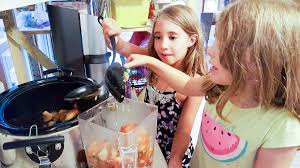
You got to chop some apples to make applesauce


UnknownToday I made some applesauce. I just cut up some apples that had been in my fridge for a while, and simmered it with water and sugar. While I was chopping and peeling the skin off, I was thinking that I hadn’t done this in quite a while, and trying to remember if I had ever done so with my kids. In fact, I was trying to remember how many cooking/ making type things we had done together. Not too many! We certainly made lots of baked goods. We would mix and scoop cookie batter, we would frost cupcakes. Making ice cream in a great plastic ball filled with ice was a big hit, because we rolled it around the kitchen to mix it and wait for the final yummy frozen result.


As a preschool teacher and mom, I have done cooking activities with other peoples’ kids. I began to reflect on how that was different than doing it at home. The answer it turns out is time. In school, teachersschedule the cooking as a lesson. They plan ahead to have the materials and steps ready to insure success for their students’ understanding. At home, we often do not have lots of extra time to spontaneously cook with our kids.

Like so many parenting tasks, we are challenged by the planning and scheduling of time. The good news is, that every day we need to eat. Most of the time, we prepare food and eat at home. So it should be easy for us to find an extra five or ten minutes to slow down and do part of the food prep with our kids.

The beauty of cooking is that it incorporates so many different skills. First there are the senses: what does the food look like? ( what does fresh food look like? What color? ) What does it smell like? ( Great for descriptive words? Does the smell change as it cooks?) Getting your hands on food, besides being a great lesson is hygiene and hand washing, can open up a variety of tactile sensations. Even the sounds of eggs or nuts cracking, meat sizzling, or a knife slicing though an apple signal our brains that something good is on it’s way! Second, in addition to these sensations, food prep is a lesson in cleanliness, measurement, pouring liquids, multi-step sequencing, chemistry and patience!

That last skill, patience, is aboveand beyond all the others. It is a life skill! If you can spend a few minutes every few days purposely modeling the patience it takes to carefully chop, mix, measure, or stir, you’ll be modeling how to be patient when writing with pen and paper, waiting for someone, or building with construction toy. This translates to good practice for your kids when they are at home, so they will be ready to wait their turn in school or keep their cool driving behind a slow car or bus.
images


So then look for any opportunity to “ask for your child’s help” when you are cooking. Depending on age and dexterity, your child can actually help you do some part of the cooking. At first, it may take more time, but once you kids have mastered some fundamentals, they will actually be able to reduce the time you need to devote to cooking, or even make some foods for themselvesin time. Isn’t that the goal after all? When they leave home they should be able to make some basics like an omelette, roast veggies, boil pasta and cook a chicken and some hamburger.

It’s wonderful to have company in the kitchen. Some of my best talks have taken place while cooking with my adult children. One daughter loves to cook, and has actually encouraged me to widen my repertoire of recipes. She could make a great ramen in her college dorm room with a packaged noodle cup, rounded out with chicken breast, salad bar veggies, and hard boiled egg. All she had to do was microwave and through her ingredients together. She wouldn’t have thought to do this if she didn’t have the experience at home. Now living back at home, each daughter is responsible for cooking dinner one night a week. There have been some hiccups with the timing of grocery shopping, and estimating prep time and cooking in order to serve up dinner on time. But with practice, our daughters are mastering the whole sequence of dinner, and meals are varied and delicious.

A few Thanksgivings ago, when we didn’t have any guests coming over, my daughters planned, prepped and cooked the whole Thanksgiving meal. They spent a long time breaking down the menu, figuring out what the prep involved and who would do what. As it turned out, they found that one loves the prep but hates the cooking, and one loves the cooking especially when the mis-en-place ( all the prep laid out ahead of time) is done for her. With some coaching from me on the sidelines of the kitchen counter, the timing and use of oven space and pots and pans worked really well. They put into practice the skills they had, and saw the big picture of how to use your equipment, space, and time. Moreover, they practiced their negotiation and good communication skills. I figure, they will need these skills in their friendships, marriages, jobs, and in managing eldercare later in life. That Thanksgiving was particularly memorable for all the right reasons!

So like any other lesson learned, the more concrete how-to yields more abstract skills that are life skills. The sense of accomplishment will be great. So begin in the kitchen; begin with some apples. Let your toddler wash the apples, your preschooler measure the water and sugar, your elementary school aged kids chop and peel, your high schooler boil the mix and monitor it till it’s done. The satisfaction you will all have in eating the apple sauce or whatever you choose to make will be well worth the investment of your time.

Mother’s Day Gifts

Mother’s Day Gifts

My youngest daughter recently graduated. It was a happy event, in the University sports complex, which was attached to a large two story domed field house. This is where the graduates gathered and got organized before taking their walk into the ceremony. As the guests entered the building, we passed along an upper walkway, with large glass windows overlooking the assembling graduates. Like me, other parents and family stopped to see if they could find the student they knew. So as I stood, camera in hand, looking for my daughter, I was jostled by others pointing, waving, taking photos and exclaiming “Oh! Look, there he is!”

I had an overwhelming sense of deja-vous. I had a powerful sense of having come full circle, from standing at the maternity ward window, looking, smiling at all the babies in their bassinets, to now trying to catch my daughter’s eye as she prepared to make another important rite of passage.

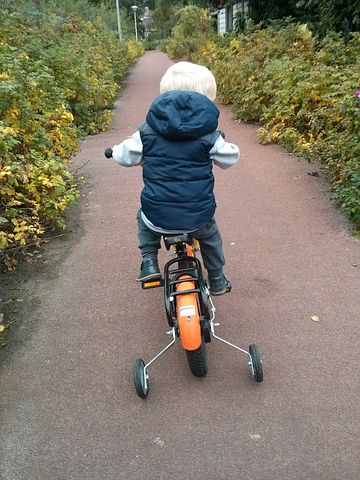
It had all gone by in a flash. Twenty-one years, a life time, and no time at all. I was struck by the enormity of how many milestones she had achieved. This bright young woman had thrived as a baby, potty trained, learned to ride a bike, learned the alphabet, how to read, how to organize. She passed milestones in girl scouts, piano lessons, and learned to drive. She got her first period, got her first bra, and stopped getting taller. The braces came off, the glasses turned to contact lenses, and flats into heels. She got jobs, got A’s and internships. Now I was looking down at her in a black gown with honor cords around her neck.graduate-2197406__480.jpg

The importance of all these milestones can’t be underscored enough because they are sources of real confidence, real sense of self. At each one, I was there giving guidance, explanations, insights, but she had done it on her own in the end. There are many times when I could have done something for her, but didn’t, knowing the achievement is the real source of pride. Each step was the building block for her next challenge.

Often I see parents who want to swoop in and “save” their child from struggle, or failure. That is the most parental of impulses, but it is one that robs our kids of their feelings of self – worth and actual achievement. We can’t teach them how to be successful without leaving them alone to figure it out on their own. Even failure is a vital lesson is teaching children how to get up and try again.

So as I stood there at the window on graduation day, I finally caught sight of her. She was with friends, and I saw a woman take her photograph. She was the mentor my daughter had worked for in the University Marketing Department. She wasn’t taking her photo because she loves her, nurtured her, or would do anything for her. She wasn’t me! She was taking the photo because my daughter had forged a relationship, worked hard, met expectations, and achieved success working for this woman. It had all happened without me. It was all her. It was the real milestone we were celebrating. It was a day to celebrate all the things I hadn’t done for her, thus paving the way for her to do it herself.

So no matter what the graduation speaker talked about, no matter what good wishes for the future were bestowed on the soon to be graduates by the University president, it occurred to me that the life I had set into motion was truly ready to go forward independently. I was full of pride for her, and ever thankful that chance had saved her from many hardships and pitfalls that might have held her back. I was thankful that I hadn’t held her back. I moved inside and took my seat. Did I mention this was on Sunday, Mother’s Day? What a wonderful gift.

bike-550223__480.jpg

Family trip or vacation? There’s a difference!

We are a society on the go. Whether it’s work, school, daycare, activities, or trips, we are usually preparing to leave or regrouping upon return. Taking the baby out for the first time can be a logistical challenge. The backbone of success in my opinion is to keep things organized, and be consistent with how you prepare.

My husband and I just returned from a lovely trip with two college–aged daughters, it is potentially one of the last “family vacations” for our nuclear family. It was wonderful. We spent a week in a new city, did sightseeing, ate out, and really enjoyed the time together. I spent many hours planning the trip, down to the smallest detail. That is not to say that we had a rigid plan. On the contrary; my planning was contingency planning. It was amassing knowledge about the city we were visiting, becoming familiar with the transportation system, the restaurants, and what we would see at each site, each activity etc. This may sound nuts to you, but hear me out. girl beach chair

On another trip, I was taking a mid-day break by the hotel pool, and over heard a conversation that was something like this. “So, what did you do this morning?” “Oh, it was so frustrating! We went to the museum, and it was closed! We wasted the entire morning and didn’t get to see anything.” Blah blah blah. I grimaced. Waste indeed! Like me, and countless others, these tourists had paid for airline tickets, hotel, etc. and gotten nothing in return for their investment.

My time, and yours, is valuable! Especially when you are traveling, you want to get value for your money.So investigate the opening hours of the places you want to go! See what’s offered, so your child doesn’t pitch a fit because they want to see the dolphin show, but can’t because you didn’t sign up for the free tickets weeks before. My strategy is to put my name on every list, reserve the space, just in case! (Disney World is a particularly intense destination; I’ll have a whole essay on that.) Similarly if you are planning a day of errands on main street, see when the library story hour is, and work it into your day as a break. In addition to your groceries, you’ll have books, and an accomplishment to feel good about!

So the best strategy for any excursion, near or far is to plan for the contingencies. On this most recent trip, I was prepared by knowing which sights were located close to each other (so we didn’t waste time crisscrossing the city), several restaurants in the area that we could choose (so we didn’t get so hungry and cranky we would fall into an expensive tourist trap), and a list of subway and bus lines that would easily link the places we wanted to go. Most importantly, I had grouped them according to the days and hours they were open, so we knew if we wanted to see Headliner A we had to visit on a Tuesday or Wednesday; Headliner B was a Monday visit, and so on. That gave us the flexibility to visit the headliner, and then say, “ok, what else do we feel like doing? X.Y, Z are close by, and we can grab lunch here or there, some fresh air at this park, and an ice cream at this place.”

Let’s apply this same strategic planning to a day of errands. If you have to get drug store items, groceries, a hair cut and pick up dry cleaning, then you have to arrange them in a logical way (groceries last), identify where you’ll stop for a break ( and pack the snacks ahead of time) and know what time the dry cleaner closes, so you don’t miss it and have to go back. Also keep in mind the location of hot-spots like the carnival/ toy store/ pet store, don’t choose the store where the kids will see the attractive hot-spot, go 5 minutes out of your way to the other grocery store, to avoid the tantrum and stress that would have ensued. Then when you do have the time and plan to see the “funtastic” attraction, you are the hero for giving the kids such a wonderful surprise!

As for packing for your trip, I always had my diaper bag stocked, with each item carefully tucked away in the same pocket every time. Each day I would replenish the consumable items; diapers, juice boxes, clean bib, binky etc. I kept some bigger rarely used things in a box in the car. Things like a change of clothes, first aid kit, and a couple of party favors incase all hell broke loose and I needed a new shiny distraction! I also kept my things in the exact same place all the time. My bag hung on a hook. The keys were in the zippered pocket, my sunglasses on the outside pocket, etc,etc. I never had to run around looking for these items. I was consistent, which I am sure is the key to organization and stress reduction!

So let me end where I began. This family vacation was the first vacation for which I did not need to make any parental preparations, or work while I was on vacation. My girls are adults, they knew how to pack, prep, travel and take care of themselves. We were four adults on vacation together. What a joy! I used to say of other vacations, while they were fun to varying extent, for me it was “same job, different location.” Because I was still meeting the children’s needs every day, and then some, because I had to anticipate the new needs of being away from home. I promise you, the day will come and you will sigh with relief that all the years of planning have paid off. Hopefully your example will be another gift for your child, and the organization and planning will be part of their lives too. Few of us have the benefit of being taught this at home, so whatever you can do to anticipate, plan, prepare and be consistent, you and your child will benefit! Happy travels!

toddlers swimming

Pet Peeve:

I know so many people who have stayed in posh hotels, which offer amenities they will never use. Your room rate supports the spa, the salon, the room service etc. If those things are not part of your plan, skip it, and spend the money on something you will enjoy! You can save so much money, and spare yourself the tease of temptation when you are not able to take advantage of those amenities, by staying someplace else! Try to think of it as a family trip, not a vacation! Personally, I would rather stay focused on the kid – fun on family vacations, and then spend time pampering myself when I can really be free of responsibilities. When I’m with the family, I want to be with them. That usually means doing kid stuff, not going somewhere just to leave the kids in the resort camp. If that means making your family trip a bit shorter and going away with only your significant other on another occasion for a real vacation, or just getting a babysitter and having a day to yourself in your hometown, I’d rather be focused on either the family or myself. Trying to do both sounds too frustrating to be worth it.Family tr

An apple a day?

An apple a day?

Nutrition is one of life’s essentials. Every adult has eating patterns that have developed over a lifetime. As parents we judge ourselves and our children’s eating habits and try to form them in as healthy a manor as possible. Too often and unfortunately, nutrition and eating habits become separated and a lot of our emotional baggage becomes attached to our eating habits.

I’m from a Greek family, and if you don’t know any Greeks, or have never seen the movie “ My Big Fat Greek Wedding” I can summarize the way I was brought up. Food is Love. As simple as that, the way to take care of someone, the way to express your love is to give them delicious food. Sigh. It has been a battle to resist the natural instinct to serve vast quantities and variety of food for family and guests in particular. As my girls grew and brought friends home, I have amended my cooking habits, and while I still pride myself on being a good hostess, who has a well stocked kitchen, I am making a serious effort to select healthier foods.

The first decision about feeding your baby is to breast-feed or bottle-fed. I have to believe that both of those are good choices and I’m not going to come down on either side. But there’s something in that first choice that seems to be ingrained, we want the very, very best. Somewhere along the way that strictly nutritional choice becomes mangled up with external and internal judgments and expectations. It seems like the kitchen table becomes and arena for competition between parents. So what ever you feed your child, somebody is going to criticize you for your choice. As your child grows, the myriad of other food choices will continue to challenge you.

The most valuable advice I received was to view your child’s nutrition by week, not by day or meal. Over the course of a week, they will get adequate healthy food. Rather than fighting about the untouched vegetables or junk food, try to make your focus to build a healthy attitude about food. Develop the willingness to try new foods, the judgment about portion size, the realization that mealtime is about socializing, not just eating.

I’ve seen parents engage their child in a battle of wills over mealtime. This just reinforces in your child’s mind that they will have your full attention by NOT eating. Believe me, they are more hungry for your attention than for the most delicious food. Adults can turn the tide by not talking about food, just sitting and talking to the child without distractions, and eating healthily themselves thus modeling the desired behavior. Mealtime (ok, parenthood) is not for hypocrites! They notice exactly what and how you eat. If you are battling bad eating habits, now is a great time to reform your own habits. So if you view the week and see that there have been too many low quality meals, serve a plate of veggies for dinner that night! Radical! If you start before there is a problem, this variety of meals will be the norm, and your child will get plenty of good nutrition. Portion size is a similar challenge. I think following the same ideas discussed above will work for portions. We pass along many attitudes about food without realizing it. We reinforce the hierarchy of food when we say “no dessert unless you finish your dinner”. Well, that just reinforces that dessert is more valuable than the meal, since we must “pay” for the dessert by eating the less desirable meal first.apple-15687__480.jpg

This generation has often been fed at a restaurant table. The limitless choices can be another challenge for parents. When our children were small, I would give a choice of three items. Regardless of the many options, I would limit the alternatives, because kids need limits as much as they need choice. At home, dinner was a single plate situation. Everyone ate what was offered that evening. There were no special requests, special meals etc. We allowed the options of omitting a sauce or something. As they grew, we also allowed them not to eat some part of the meal if it was a consistent non-favorite. It wasn’t substituted for another dish, you just had the option of filling up on the other sides etc. that day. When looking at it as a week of nutrition, not eating the peas, avocado, or chicken wings isn’t a big deal. As teens, they helped cook, (another social interaction) and were expected to help prep, serve, and clean up. Particularly when everyone in the home has a job outside the home, this type of team mentality is important. Meals are the perfect time to demonstrate that team spirit!

Lastly, and for an assortment of reasons, the idea that we eat when we are hungry, has been lost. We eat according to our emotions. Avoid using food as a reward or consolation prize. Teach your kids how to deal with their sad/ angry emotions. Food is a comfort for sure, but encouraging food as a way to counteract negative emotions is not healthy. This will segue into your discussions about drugs, alcohol etc. later on…
We carry juice and snacks everywhere. Offer them in the context of having a break, and fueling the day, not as a comfort when stuck in traffic, or to keep quiet while sitting in the shopping cart.
My girls were in elementary school when the Harry Potter books were released. They were just a year or two behind the curve of reading the series on their own. As a former reading teacher, I always encouraged all manner of enjoyment of books. I am also a fan of audiobooks. So I decided to introduce the “Harry Potter dinner”. I borrowed the books on CD, and we would devote one dinner ( we always ate dinner as a family) a week to Harry Potter. My girls say this is one of their finest memories. The excitement that we could hear another few chapters, discuss and speculate what would happen next, made mealtime a delight. We always sat and talked, but having a common book ( a book club essentially) to talk about let us bond in another way. We would form options, we would argue our case, and see who was right the next time. As a reading teacher, I subtly asked questions about characters, motivation etc. as we do in the classroom. Besides being a learning experience, we had the chance to all be excited about the same thing.

Eating dinner every night as a family has so many benefits. It was an anchor in the day. We could give and get full attention from each other. We taught good table manners, polite table discussion topics, waiting your turn and interjecting appropriately in conversation. It was also a break from the frenzy of homework, bills, pets etc. where we could feel like our contribution mattered. The girls grew to realize that their trials and victories were just as important as the parents’. How insightful to hear that Mom or Dad is being challenged at work, and how they resolved the situation. The older child could advise the younger about some situation at school. It made us a team. Mealtime was something to participate in for the emotional and social benefit. It had nothing to do with food.

Swaddling – How your actions can soothe at any age!

Swaddling – How your actions can soothe at any age!

Swaddling, to wrap tightly in garments or cloth, is something they showed us when we had our new baby. The tightness of the cloth helps comfort the baby by giving him a snug, strong feeling, much like a heartfelt hug. It really helps to calm and soothe a baby that’s crying or fussy. It is a measure of security and control when the child is feeling out of control or his or her emotions are snowballing.

I can remember being out with my 4 and 6 year olds, when an unprecedented tantrum took place. Neither of my girls ever threw tantrums, so I stood in disbelief as the 6 year old disintegrated into hysterics because I refused to buy her a pair of pajamas with some princess or what not on it.
christmas-kids-1073567_1280
This story has two parts: first, my resolve not to be bullied into changing my mind by bad behavior, and second, how swaddling (hugging her while she pitched a fit) helped. First, I was and still am to a great extent, thoughtful before saying yes or no. Answering “let me think about this for a minute” with the occasional addition of “tell me why this is important to you” is a very respectable answer. It teaches that you should think before speaking or making up your mind, it teaches that you sometimes need to lay out your argument to convince someone to your point of view, and most importantly, it taught my kids that I valued their point of view, and was not making a decision on a whim.
However, once they had their say, once I had considered my answer, it was unwavering.

If you allow your children’s bad behavior to sway your choices and decisions on their behalf, you are negotiating with terrorists. The child will see the crack and exploit it every time. It also gives away your responsibility as a parent, as the adult in charge of the child’s well being; in short, you’ve not done your best. Not wavering is hard, really hard. It can take the last bit of strength you have for the day. If you give in, you are teaching kids that any rule can be broken, that consequences are flexible, and that they can pretty much get their way if they act badly enough.

Now apply that to a teen environment with drugs, alcohol, a speeding car, and a cute boy. No. This is your chance to form their behavior before these actual life- altering variables enter the picture.
So back in the department store, the 4 year old in the stroller, and I are watching the 6-year-old scream at the top of her lungs, cry, and literally beating the floor with her fists. (I only thought that happened in the movies) People are staring as they walk by. I have to be cool. If I get mad at her, I’ll only escalate the problem. Things are racing through my head… can she hurt herself? No. What brought her to such a low point? Is she getting sick? Did she not sleep well last night? Does she need a snack? How long can this go on? So I decide to take a step back, I stand nearby, and calmly say something like “ Honey, I’m going to wait for you to calm down. You need to take some deep breaths” and then I stood there dispassionately (on the outside) and tried to wait it out. When it was apparent that I wasn’t going to pick her up or reach for the pajamas in question, she stood up, and came to confront me face to face.

That’s when the swaddling came into play. I sat down on a display, leaned in, and wrapped my arms around her tight. She was still crying, and talking, but didn’t try to resist. I held her, and held her, and talked in a calm voice. I told her I loved her, I told her I was sorry we were not getting the pajamas today, I told her she would feel better if she could take deep breaths (I tried to do so too, so she could feel me breathe as I held her). I
n about a minute, she was still talking but no longer in the throughs of a tantrum. I released my hug a little, to look into her eyes, I repeated myself, kissed her, gave her a tissue, and slowly but surely, we were able to walk away calmly.
Of course she promptly fell asleep in the car. My nerves were shot! The younger daughter was still wide-eyed, and I had to comfort her a bit, because neither of us had ever seen anything like it. Luckily, I can say that that was the only tantrum I can really remember. I credit their easygoing personalities, but also take credit for my consistent parenting too.
Children need to know the limhouse-1740295__480its of their world. They need to know what is and isn’t okay. They need to know that you’ll always love them no matter how awful their behavior is, and that you’ll try to support them through the hard times. When children know the rules, it gives them security. Do you know small babies cry when you take off their diaper? It’s the same idea. It’s nice and tight. There is comfort in security. Children don’t like feeling uncertainty. They don’t need to flail around testing one rule and then another. Children need the security of our hugs, our love, our rules to guide them. Just as we swaddle them with a blanket on their first day, they need the same loving security and comfort from a very firm, tight, daily routine.
I’ve often referred to myself as a hard-ass, but really I mean that in the best way! Being tough, enforcing the rules every single time is the definition of the job of parent. It paves the way for all the good stuff. I’ve heard parents say that they spend all their time fighting and arguing and trying to get their kids to behave. They could rescue the situation by ending the talking, and standing firm. It really doesn’t take long at all for the child to realize they aren’t getting anywhere with arguments. Without all the available time spent arguing, the family is left with lots of time for great one on one interaction that is love and fun-filled. That really is the goal of every parent! Hard work aside, we love our kids, and want to spend as much time with them having good interaction. The change comes from us. It takes effort, but is so worth it in the end. They’ll be grown and away sooner than you think! I for one am glad our memories are of laughter and cuddles instead of tantrums and arguments. Those memories are what will swaddle you later in life!

Breast, bottle, and beads up your nose!

Breast, bottle, and beads up your nose!

If you want to make my toes curl, remind me about breastfeeding. For me, it was just a horrible experience. Without getting into the details, let me just calm all the pundits by reassuring you that we tried. I expected to do this. So I sat in the pediatrician’s office, one and a half weeks after delivery, tired, frazzled, feeling inadequate, helpless, like all my preparation was for nothing. Then the doctor walked in, and I burst into tears. He patiently listened and asked questions. Finally, he just said “Why aren’t you just giving her a bottle? You are no good to her if you are too tired and stressed to function.” I remember looking up at him, with tearful eyes, and blubbered something to the effect of “Really? Is that okay?”

child-221069__480

He understood the notion of my expectations, and gave me permission to let go of something mothers are “supposed to do”. Baby formula sales are a $20 billion dollar business. Common sense can tell you that breast is best, but that there have been millions of formula – fed children who grew up beautifully and healthily. That is common sense too! We are fortunate to have an alternative. My daughter might have died or had some terrible complication of malnourishment otherwise! My pediatrician was the wisdom I needed to recognize the change I needed to make. His encouragement allowed me to not feel guilty about feeding my baby! In the end, I was giving my daughter the nourishment she needed to thrive.

Your pediatrician will be your best friend over the next 18 years. Find one whom you like and can relate to, not just a doctor who has impressive professional credentials. Many pediatricians are in a practice with other colleagues. See more than one of them. Doctors go on vacation, they move on, you want to have a good relationship with all of them. Its okay to have a favorite, but take the time to feel comfortable with all of them.

I think that the powers that be also came into play every time I called after hours, on the weekend etc. For some reason, my favorite doctor was the one on – call about 80% of the time. That was incredibly reassuring. After a while, we began to joke about it. That was even better, because I knew for sure that I wasn’t just another mommy, a blurry face in the sea of parents he talked to every day.

In the years that followed, we tackled routine and unexpected illnesses and mishaps. The day in December that my daughter decided to be Rudolph, and stick a red bead up her nose is particularly memorable. This anecdote underscores three important things: have someone you trust that you can leave your kids with when unexpected things happen; yes your well – behaved, reasonable child will do something dumb; and common sense rules the day.

carnival-1179497__480

So my four year old came to me smiling. “Look Mommy!, I’m Rudolf!” She’s beaming. There’s a red plastic bead in her nose. I calmly smile, and say basically, okay, let’s get that out of your nose. After five or so minutes the situation is rapidly declining. Nose blowing and tweezers create a rapidly declining situation where she is starting to tear up in a panicked attitude of “don’t touch me” alternating with “GET IT OUT”. Here’s a situation I can do something about. Luckily my sister in-law was over visiting, she stayed behind with daughter number two, and off to the pediatrician we went. I confess that this was the first time she had done anything like this. I wasn’t worried about her physically, but the thought that kept running through my head was “How could she have done such a silly thing?” The obvious answer of course is, because she was three years old! Parents confuse intelligence and maturity. Being smart does not mean your child will be any more mature than any of his or her playmates.

tissues-1000849__480

By this time, Rudolf is almost hysterical, crying. I choose to ignore her in favor of driving safely to the pediatrician. Her crying was a symptom, not the problem. Stay focused on the problem. So fast-forward fifteen minutes, the doctor walks in, calmly assesses the situation, and picks up a tissue. Common sense wins the day, all her crying had prepared that bead to slide right out with one gentle blow. If she had approached with a medical instrument, my daughter might have thrashed, or worse, inhaled the bead.

I think I must have blurted out “What were you thinking?” at some point. But you will learn just as I did, not to ask questions you already know the answer to. She wasn’t thinking; at least not like you or any other reasonable adult. That’s why they are children in our care. Their brains are physically incapable of processing some kinds of information. That’s why expecting them to reason like we do is ridiculous. You will do far better just saying yes, or no. Long explanations that make sense to you, are like a tidal wave to them. They need just a spoonful of an explanation, punctuated again with a firm yes or no as necessary.

You will be reduced to this childlike state too, in your pediatrician’s office. With any luck, he or she will know how to treat children and the parents. When I sat blubbering about breastfeeding, I didn’t need a tidal wave of explanations, scientific medical research or a dialogue of pros and cons of bottle feeding and formula. The doctor spoke to me simply and with empathy. He communicated just the information I needed to get past my hurdle. He knew we had the power to change the feeding routine, he gave me the courage to do it, and had the wisdom to approach me with a firm, authoritative manner. Strive to be all those things with your children.

Small favors we do for ourselves, and them!

sleeping-1159279_1280

An ounce of prevention is worth a pound of cure. Prepare for the worst, expect the best. These sayings are absolutely true, and they speak to one of the challenges of parenthood. As much as we may fantasize about a long uninterrupted bath, a quiet hour to read a book, a good workout, or even an extra hour of sleep, these things are not as restorative as the satisfaction of an entire day that just went right. Too often we are in crisis mode, fixing or adjusting to a mishap, or unexpected glitch.

I want to convince you that looking back on a day gone well, is a tremendous feeling. You have a feeling of empowerment, of control, that is much better than the desperate collapse of stealing a relaxing moment. Not that I’m anti- workout, or anti-sleep! My idea is just that once you can turn the corner from playing catch – up to planning out a day, you will feel less stress, and less cumulative need for those moments of relief. You’ll even be able to work in more rest stops along the way!

Here’s the point: If you can devote yourself to a little planning ahead, you will reap a huge reward. The idea is to work smarter, not harder. When I cook, I cook for an army. I freeze half, thus saving myself half the dinner prep time in the futurepexels-photo-144432-large. When I look at my schedule, I don’t just look at the day ahead, I look at the next three months. That way, I know I need three birthday gifts, not one. That means one shopping trip, not three. Better yet, I spend 10 minutes at the computer ordering the things I need instead of dragging everyone out at the last minute because the party was the next day.

I do the same with the doctor visits, (all the kids the same day) more than one checkup on the same day if possible ( dentist and pediatrician). That way a minimum time is spent out of school, and we are not making multiple visits. I also group things geographically. Never mind that I have to drive an extra ten minutes, but I choose the stores and errands that are nearer to each other.

I also treat my car like a very organized locker. I always have emergency change of clothes, snacks, garbage bags, paper towels, and party favors ready to go. It takes 10 minutes to grab a bag and put these things together. Having them on hand is invaluable when you’re stuck on the road, your child throws up, or whatever. Think diaper bag on a larger scale. We are a car society, so having a well stocked car means you can have everything at your fingertips. In the winter, I also put old ( grown out of, sort of) coats, mitten, gloves, boots and blanket in a duffle bag. In case we are ever stranded with car trouble, we won’t freeze.

There are also a host of things I don’t let get in the way of my routine. Forgotten lunch is at the top of this list. I have brought lunch, only if and when I’m going out for other errands, or if the after-school schedule was particularly late. Assuming your children get three meals a day, not having a lunch one day, and subsisting on a donated snack from a friend, is a growing experience. We all believe that getting hungry is to be avoided at all costs! We should teach out children what we can do to help those who are truly hungry, and not over indulge them with constant snacking.pexels-photo-91986-medium

Other things that I don’t let get in my way are forgotten favorite toys, etc. because I believe that children never learn something till it becomes important and meaningful to them. Parents need to stop providing every thing to their kids before the child even knows he or she needs it. One bored car ride without a toy might be annoying to you, but it will make your child responsible to bring the toy from then on.

Always look for ways to remove yourself from the equation, and give them real opportunities to do for themselves. Wouldn’t that be a relief, not to have to react to, and stress out from a forgotten this or that. You’ll be teaching kids that planning ahead, and being prepared can make life less stressful, and make you feel empowered for having gotten it right! Win-win.

Time to soar

kite-1159538_960_720

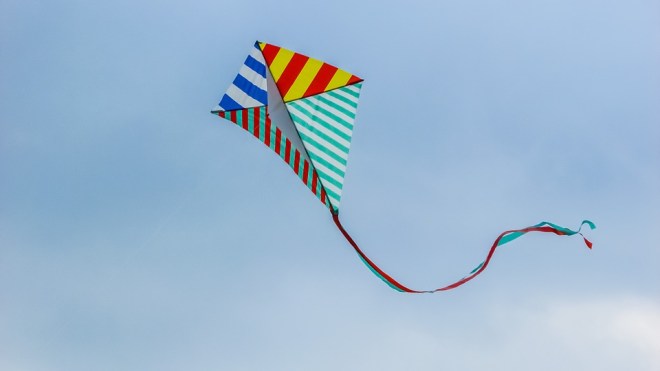
While at the beach one year, we were enjoying the cool breezes on the balcony. There were boats out on the water, umbrella flapping, and kites flying. We saw one kite fly up, up, up until it twirled wildly and started to sag and drift across the dunes and fall headlong onto the grassy sand. It was a pretty little pink kite, with some character on it, and two or three pink bows along the string for weight. It hung limply, it’s string caught on the wooden fencing that lines the dunes and walkways.
As we watched, a man approached the dunes, ready to follow the string to it’s floppy end. We waved at him to show him where it was, and watched as he hopped along the hot sand towards the kite. We saw too, the little girl in her hot pink suit rubbing her hand, and looking after her father. The story became clear. the brisk wind had been too much for her, and the little kite had pulled away from her grasp.
What makes this story stand out for me, is that it is an allegory about parenting. One of our important jobs is to provide opportunities for them to try new things, and to be there as a safety net. We have the benefit of experience and can either instruct in the best way to tackle a new challenge, or can anticipate problems before they arise.
The tough part for the parent is to take the time to do so. It is frustrating to sit by and watch as your child struggles with something. It is hard to see them try and fail. But doing so is essential in learning something new. We all know about the so- called learning curve, which is absolutely a real thing. So time is the part of the process that is toughest on adults. We are ready to move on to the next thing, and so stopping what we are doing, in order to let the child try to do it themselves is frustrating. Too often, we just keep on moving, and do the task for our child. That removes the chance to try.
The adult in my kite story had given her the chance to try. Typically, she wasn’t 100% successful, but I’m sure she took great pride in seeing her pretty kite up in the air. She’ll remember how the string felt as it tugged against her hands. Most importantly, she learned a lesson about that moment when it got away from her – she’ll ask for help next time she feels a situation getting out of her control. Hopefully, the parent will anchor the end, or show her some other trick, if he takes the time.
Time is the greatest gift we can give our kids. Whether it’s to teach, or just to love, our time becomes their greatest asset from which they can draw on experience and be reinforced in their successes.

The Goodnight Board – Lifelong lessons in family

The Goodnight Board – Lifelong lessons in family

family photosNo matter what the make- up of your nuclear family is, you are likely part of a larger group of people you call “family”. Whether they are made up of blood relations, or friends who have earned your love and trust, they are people who will be part of your child’s life for a long time. To that end, let me share some thoughts on family, and a lovely routine we had in our house.

In my essay on sleep, I describe the importance of establishing a bedtime routine. At our house, the first step was to dim the lights (yes, put the kids’ lights on a dimmer; its great for middle of the night infant feedings, nights when your child is sick, and every night at bedtime!) Change into nighttime clothes/ diapers and then say “goodnight” to everyone in the family.

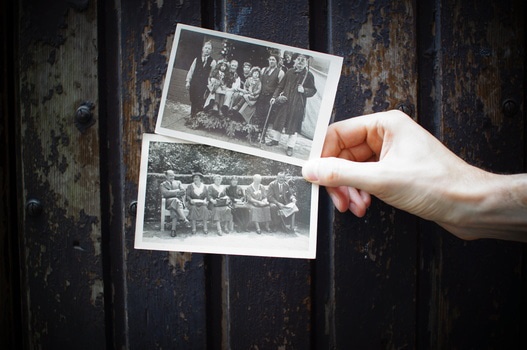
Hanging near the crib / toddler bed was a bulletin board with photos of the closest members of the family. Each one was a 4×6 nice clear close- up picture. So we would look at the pictures and point to each one and say “Good night Grandma, Good night Grandpa, Good night Carla…” and so on. We even had a picture of our dog. Then the last good night was a kiss and hug from the adult, and then into bed, lights out, and door closed. We instructed anyone who stayed with our girls to do the same, so bedtime was smooth and easy.

When the baby was small, obviously some facial recognition occurred, but the soothing nature of the routine was paramount. Later, our children would smile at one photo or another, showing a real emotional connection. Lastly, when they were a bit older, we had a phone list with the same pictures so they could identify the faces and phone numbers as they learned to use the phone…. Yes a land- line! How Quaint! This last step would certainly be a no-brainer on cell phones contact list, and Skype contacts too.

As they grew, the idea that some people are closer to us than others as individuals and as a family is a valuable lesson. It teaches children that not all families are cookie cutter units with a mommy, daddy, and children.

It teaches them to have pride in their family, no matter how its members are arranged. It also teaches them about the differences between family, friends, and strangers.

Once at the grocery store, I was chatting with the clerk. After we left the store, my daughter said, “Bill is our friend!” because he was always cheery and familiar with the customers. I took this instant as a “teachable moment” which you must always be on the look out for! I paused to explain to her that no, he is not our friend, but he is a stranger with whom we are friendly. I gave examples of how we interact with friends (they visit our house, we eat together, we talk on the phone) versus being friendly with a stranger (talking at the store, holding the door, chatting with a neighbor).

Setting up this distinction lays the groundwork for stranger awareness later on. They will see that even though the pizza guy comes to the house, he doesn’t join you for dinner!pizzaOur kids will be accustomed to protecting their privacy, their space, and their bodies if you have taught them this from the youngest age. Moreover, they will understand how special it is to be a member of a family. They will see that the people on the bulletin board, those in your home, are special and have earned your trust.


I introduced the idea of people who may want to hurt us, those who “break the rules” by using the phrase the “oh-oh feeling” that instinctive feeling that we all have, but often override in order to follow social norms or not cause offense. It’s the feeling that tells you not to get into the elevator or to change your seat on the subway. Giving the feeling a name incorporates it into the kid’s vocabulary and hopefully opens the door to a dialogue when they do have that feeling. My mother had a friend who would come and literally pinch my cheeks hard every time she saw me. I never said anything, and while she was just an annoyance, I just suffered the burn instead of feeling empowered to say or do anything. As a parent, you must find the times to have the difficult talks!

It will be your job to give them permission to call out any family member or friend who breaks the rules as a potential child molester or abuser. Statistics show that in most cases the child and the family know these adults. When having conversations about grown –ups who break the rules I felt justified in telling my girls that even if the person who makes you feel uncomfortable is Uncle Joe or my best friend, that I love you more than I love Uncle Joe or whoever, and would want her to tell me if any grown up made her feel uncomfortable. Our children need to be believed, and not afraid to express any deep secret or emotional issue they may have. You as the parent are the head of their family, the closest, most important person in their lives. It is a relationship of absolute trust and trustworthiness. You set the tone and model what that familial bond and relationship should be.
In later years, they will use these criteria for extending trust and friendship to people in their own lives, hopefully choosing friends, mentors, and partners who are worthy of their esteem. Social media has blurred the lines of “friendship”. My approach is to incorporate the technology instead of ignoring it. Get into social media and see what’s going on! Watch the videos, read the comments, see who friended whom today! This is a place abundantly full of “teachable moments”!

Your job after all is to give them what they need so they are equipped to leave you! So the first day of school, the night of the sleep over, even departure for college will not be something your child has to do alone. You will have provided a cocoon of family bonds, which they can carry with them anywhere! What sweet pleasure it is to get a text message from college saying “Good night mom, sweet dreams, love you!” Sigh, smile, “Good night, I love you more!” There’s no better time, and time well spent, than when you first start with your baby in your arms, smiling at the good- night board, saying goodnight to all the important people in your family. I think the logical progression of teaching babies about families, toddlers about friendship, and children to distinguish the difference between acquaintances, friends, and family, and your child will carry the knowledge that they have people behind them, even if they are not physically present, for all their lives.

Don’t let trips trip you up!

Don’t let trips trip you up!

open roadWe are a society on the go. Whether it’s work, school, daycare, activities, or trips, we are usually preparing to leave or regrouping upon return. Taking the baby out for the first time can be a logistical challenge. The backbone of success in my opinion is to keep things organized, and be consistent with how you prepare.
My husband and I just returned from a lovely trip with two college–aged daughters, it is potentially one of the last “family vacations” for our nuclear family. It was wonderful. We spent a week in a new city, did sightseeing, ate out, and really enjoyed the time together. I spent many hours planning the trip, down to the smallest detail. That is not to say that we had a rigid plan. On the contrary; my planning was contingency planning. It was amassing knowledge about the city we were visiting, becoming familiar with the transportation system, the restaurants, and what we would see at each site, each activity etc. This may sound nuts to you, but hear me out.
On another trip, I was taking a mid-day break by the hotel pool, and over heard a conversation that was something like this. “So, what did you do this morning?” “Oh, it was so frustrating! We went to the museum, and it was closed! We wasted the entire morning and didn’t get to see anything.” Blah blah blah. I grimaced. Waste indeed! Like me, and countless others, these tourists had paid for airline tickets, hotel, etc. and gotten nothing in return for their investment. girl beach chair
My time, and yours, is valuable! Especially when you are traveling, you want to get value for your money. So investigate the opening hours of the places you want to go! See what’s offered, so your child doesn’t pitch a fit because they want to see the dolphin show, but can’t because you didn’t sign up for the free tickets weeks before. My strategy is to put my name on every list, reserve the space, just in case! (Disney World is a particularly intense destination; I’ll have a whole essay on that.) Similarly if you are planning a day of errands on main street, see when the library story hour is, and work it into your day as a break. In addition to your groceries, you’ll have books, and an accomplishment to feel good about!
So the best strategy for any excursion, near or far is to plan for the contingencies. On this most recent trip, I was prepared by knowing which sights were located close to each other (so we didn’t waste time crisscrossing the city), several restaurants in the area that we could choose (so we didn’t get so hungry and cranky we would fall into an expensive tourist trap), and a list of subway and bus lines that would easily link the places we wanted to go. Most importantly, I had grouped them according to the days and hours they were open, so we knew if we wanted to see Headliner A we had to visit on a Tuesday or Wednesday; Headliner B was a Monday visit, and so on. That gave us the flexibility to visit the headliner, and then say, “ok, what else do we feel like doing? X.Y, Z are close by, and we can grab lunch here or there, some fresh air at this park, and an ice cream at this place.”
Let’s apply this same strategic planning to a day of errands. If you have to get drug store items, groceries, a hair cut and pick up dry cleaning, then you have to arrange them in a logical way (groceries last), identify where you’ll stop for a break ( and pack the snacks ahead of time) and know what time the dry cleaner closes, so you don’t miss it and have to go back. Also keep in mind the location of hot-spots like the carnival/ toy store/ pet store, don’t choose the store where the kids will see the attractive hot-spot, go 5 minutes out of your way to the other grocery store, to avoid the tantrum and stress that would have ensued. Then when you do have the time and plan to see the “funtastic” attraction, you are the hero for giving the kids such a wonderful surprise!
As for packing for your trip, I always had my diaper bag stocked, with each item carefully tucked away in the same pocket every time. Each day I would replenish the consumable items; diapers, juice boxes, clean bib, binky etc. I kept some bigger rarely used things in a box in the car. Things like a change of clothes, first aid kit, and a couple of party favors incase all hell broke loose and I needed a new shiny distraction! I also kept my things in the exact same place all the time. My bag hung on a hook. The keys were in the zippered pocket, my sunglasses on the outside pocket, etc,etc. I never had to run around looking for these items. I was consistent, which I am sure is the key to organization and stress reduction!
So let me end where I began. This family vacation was the first vacation for which I did not need to make any parental preparations, or work while I was on vacation. My girls are adults, they knew how to pack, prep, travel and take care of themselves. We were four adults on vacation together. What a joy! I used to say of other vacations, while they were fun to varying extent, for me it was “same job, different location.” Because I was still meeting the children’s needs every day, and then some, because I had to anticipate the new needs of being away from home. I promise you, the day will come and you will sigh with relief that all the years of planning have paid off. Hopefully your example will be another gift for your child, and the organization and planning will be part of their lives too. Few of us have the benefit of being taught this at home, so whatever you can do to anticipate, plan, prepare and be consistent, you and your child will benefit! Happy travels!

toddlers swimming
Pet Peeve:
I know so many people who have stayed in posh hotels, which offer amenities they will never use. Your room rate supports the spa, the salon, the room service etc. If those things are not part of your plan, skip it, and spend the money on something you will enjoy! You can save so much money, and spare yourself the tease of temptation when you are not able to take advantage of those amenities, by staying someplace else! Try to think of it as a family trip, not a vacation! Personally, I would rather stay focused on the kid – fun on family vacations, and then spend time pampering myself when I can really be free of responsibilities. When I’m with the family, I want to be with them. That usually means doing kid stuff, not going somewhere just to leave the kids in the resort camp. If that means making your family trip a bit shorter and going away with only your significant other on another occasion for a real vacation, or just getting a babysitter and having a day to yourself in your hometown, I’d rather be focused on either the family or myself. Trying to do both sounds too frustrating to be worth it.