
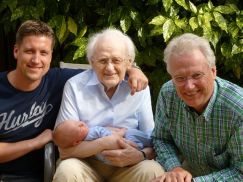
 Grandparents. The word can evoke so many images, either the soothing comfort of experience, or the spark for explosive generational conflicts. In my opinion, what determines the relationship your parents have with your kids, depends on you. I think that having our own children puts the parent-child (you’re the child in this scenario) dynamic under a microscope and exposes every nuance, every pattern of behavior that you share. Hopefully, you have a good relationship with your parents, and can build on good communication, family values, and goals in parenting; Maybe not. If your relations with your parents are tentative, then that can lead to a shaky start in their relationships with your precious offspring.
I want to believe that these patterns are not unchangeable, and that the motivation to “get it right” is very strong. If you can step back and acknowledge where there’s room for growth, then you can take control and change how you react to your parents, instead of holding on to old hurt or resentments.
The point I want to make is that you are in a powerful position here. These people are your parents, and your children. You are the pivotal link, and as such have a big responsibility. In a nutshell, my opinion and advice is to take the high road. You do not want to use your kids to strong-arm your parents into making up for their shortcomings with you. You need to be the shining example of moderation, cooperation, and understanding, for your children’s sake. I think it is a very valid to tell your kids ( in a way that doesn’t disparage grandma) that you disagree with the way she does this or that, or disagree with her choice to do whatever, that you’ve talked to grandma because you love her, and that you’ve agreed not to make the same choices that grandma made because you have different values. Ugh. Grandma may be insisting on her way. You can only choose to fight her or model for your kids, how we step back and choose how to react in a way that benefits us.
It is the legacy of one generation to the other, which we have the power to strengthen now, for all too soon, we will be reaping what we have sown.
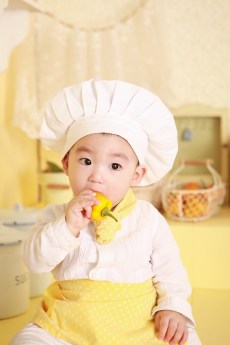
Here’s an example of how it can sound in real life: Nana is very proud of her meatloaf recipe. She recounts complements neighbors and friends have made about her delicious meatloaf. Your significant other is vegetarian, and now your 10 year old has decided to be vegetarian too. Up until now, Nana has been disappointed when serving meatloaf that your partner fills up on other choices. When Nana hears that Junior is not going to be eating meatloaf, she gets upset, saying something to the effect of “ My meatloaf was good enough for you, you are not a good parent to let your growing child limit their diet by not eating this healthy, delicious food” Deep breath. You could fight back, or say something like “ Mom, I love you and what I love about your meatloaf is the way you make it with such care. I want Junior to have memories of your great cooking, but can we find another recipe that works as your special treat when we are together?” You could suggest cooking with Junior, as an enticement. If Nana is unyielding, then try to skip meals, generate another tradition that you can focus on.
What you can say to Junior is this “ I love Nana, I’ve tried talking to her, but she isn’t comfortable changing her ways. I can live with that, and I don’t mind changing my routine to accommodate her. It’s a way that I am honoring her as my parent. Sometimes we need to show consideration for others even though we think they are wrong. I don’t want to insist or argue with Nana because that will make the time we spend together uncomfortable. How do you think we can show Nana we think she’s great, without having to eat the meatloaf?”
 I couldn’t begin to account for the numerous possible conflicts than can and do arise with our parents, in-laws, and other members of the family. The take-away for me, is that if you try to take the high road, rather than take an adversarial attitude, you are modeling good coping skills for your child. Junior is going to take the cues from you. You’ll benefit now and later, when you are the grandparent, by having open communication, and being an example of how we treat people, especially members of the family.
I was recently overhearing a conversation between a mom and her adolescent. They were enumerating the many reasons they don’t like a family member’s prospective spouse. They were both criticizing this woman, and giving examples of things she had done that irritated them. I felt saddened, because the Mom had lost an opportunity to embrace a new family member, to find some common ground, and more importantly, to teach Junior how to see the good in people instead of focusing on the negative. It was a legacy they were creating against this new family member, which would last many, many decades of family gatherings etc. I hated to think it, but if anything tragic were to happen to the Mom, this other woman would surely be in a position to be a motherly role model for this adolescent.
In more cases than not, the overall impression and memory children will have of their extended families comes from the parents. It is a gift we can give our children to paint the grandparents (et al ) in as favorable light as possible. It is the legacy of one generation to the other, which we have the power to strengthen now, for all too soon, we will be reaping what we have sown.
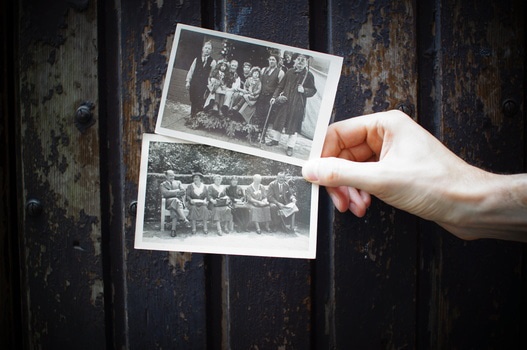
 No matter what the make- up of your nuclear family is, you are likely part of a larger group of people you call “family”. Whether they are made up of blood relations, or friends who have earned your love and trust, they are people who will be part of your child’s life for a long time. To that end, let me share some thoughts on family, and a lovely routine we had in our house.
 Our kids will be accustomed to protecting their privacy, their space, and their bodies if you have taught them this from the youngest age. Moreover, they will understand how special it is to be a member of a family. They will see that the people on the bulletin board, those in your home, are special and have earned your trust.
 Mom Emeritus